
The Honest Truth About 20-Minute Workouts (And Why They Actually Work)
I used to laugh at people who said, “I don’t have time to work out.” Not in a mean way — I just genuinely didn’t understand it. Then I started a full-time job, picked up a freelance project on the side, and somehow became the person who cooks dinner every night because nobody else will. Suddenly, I got it.
The gym sessions I used to love — 60, sometimes 90 minutes — disappeared. I tried waking up at 5 AM like those productivity YouTubers told me to. Lasted four days. Then I tried skipping workouts “just this week.” Three weeks passed.
What actually saved me wasn’t some revolutionary fitness philosophy. It was accepted that 20 minutes, done consistently, is worth infinitely more than a perfect 90-minute session done twice a month.
This article is everything I’ve figured out, through trial and a lot of error, about building a daily 20-minute workout that doesn’t feel like punishment — and that actually produces results you can see.
Why 20 Minutes Is Not “Cheating”
There’s a weird guilt that comes with short workouts. Like you’re cutting corners. Like, real fitness people don’t do this.
Here’s the thing: your muscles don’t know how long you’ve been in the gym. They respond to tension, effort, and recovery. A focused 20-minute session where you’re actually pushing yourself will beat a lazy 60-minute gym visit where you spend 15 minutes finding parking and 20 minutes scrolling your phone between sets.
Research backs this up consistently. High-intensity interval training (HIIT) has been studied extensively, and even 10–15 minute bursts of elevated heart rate produce measurable cardiovascular and metabolic improvements. The American College of Sports Medicine has published guidelines recognizing that intensity can compensate for duration when it comes to health outcomes.
But beyond the science, there’s a practical truth: the workout you do beats the perfect workout you plan but skip.
The Structure That Actually Works
Before jumping into exercises, let me walk you through the framework I use. This isn’t a rigid template — it’s more like a skeleton you can dress differently depending on your day.
Minutes 0–2: The Activation Warm-Up
Skipping the warm-up is the fastest way to either hurt yourself or perform poorly. But you don’t need 10 minutes of stretching. Two minutes of dynamic movement is enough to wake your body up.
I do this every single time, no exceptions:
- 30 seconds of arm circles (both directions)
- 30 seconds of hip circles
- 30 seconds of high knees (slow, deliberate)
- 30 seconds of leg swings
That’s it. Two minutes, and your joints are ready, your heart rate is slightly elevated, and your brain has switched modes from “sitting at desk” to “body is moving now.”
Minutes 2–17: The Main Circuit
This is the 15-minute core of everything. I use a circuit format — meaning you move from one exercise to the next with minimal rest, then rest briefly between rounds.
Minutes 17–20: Cool Down and Breathwork
Not optional. This is where you prevent next-day soreness from ruining tomorrow’s session. Three minutes of slow stretching and two to three deep breaths before you jump in the shower. Done.
The 20-Minute Workout (Three Versions)
I’ve designed three versions based on what’s available to you — no equipment, dumbbells, or resistance bands. Pick the one that fits your reality right now.
Version 1: Zero Equipment, Anywhere
This is the one I use when I’m traveling or when I just cannot face the thought of setting anything up.
Circuit A (do 3 rounds, 40 seconds on / 10 seconds rest)
- Jump Squats — Land softly, hinge your hips back. Don’t let your knees cave inward. If jumping hurts your knees, do regular squats and move faster.
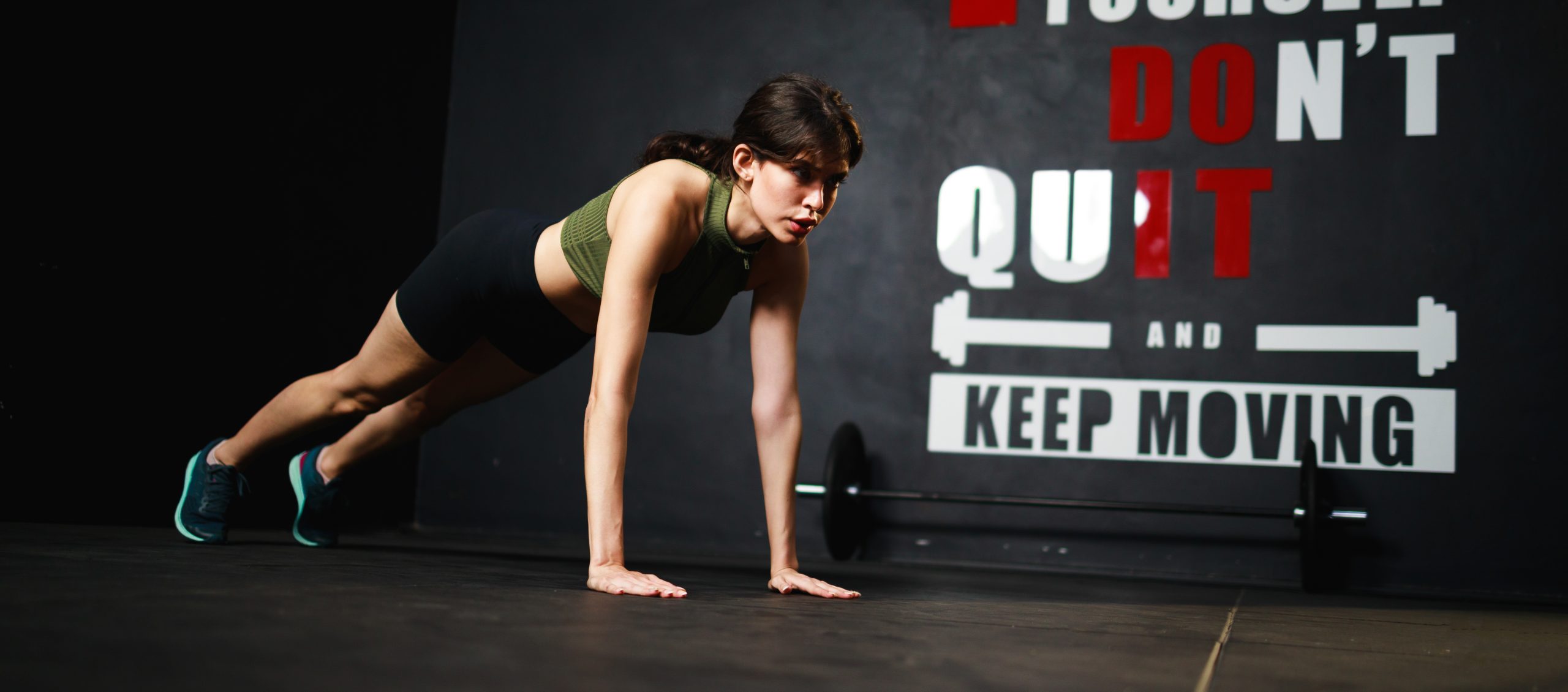
- Push-Ups — Hands slightly wider than shoulder-width, body in a straight line. Go slow on the way down (3 seconds), explosive on the way up. If full push-ups aren’t happening yet, do them from your knees. No shame. I did knee push-ups for two months when I came back from a shoulder injury.
- Mountain Climbers — Bring your knee toward your chest, alternating fast. Keep your hips level — don’t let them shoot up.
- Glute Bridges — Lie on your back, feet flat, push your hips up, and squeeze hard at the top. Hold for a beat before lowering. This one looks easy but if you’re doing it right, your glutes will be begging after round two.
- Plank Hold — Forearms or hands, doesn’t matter. Focus on breathing. Don’t let your lower back sag or your hips rise up.
Rest 60 seconds between rounds.
Three rounds at 40 seconds each, with 10-second transitions and 60-second rests, lands you comfortably in that 15-minute window.
Version 2: Dumbbell Circuit (Home or Gym)
If you have a pair of dumbbells — even adjustable ones — this version adds more muscle-building stimulus. I use 15 kg dumbbells for most things, but pick a weight where the last 4–5 reps feel genuinely hard.
Circuit B (3 rounds, 45 seconds on / 15 seconds rest)
- Dumbbell Goblet Squat — Hold one dumbbell at your chest, squat deep, elbows inside your knees at the bottom. Great for quads, glutes, and even your core.
- Dumbbell Row (each arm) — Brace on a chair or bench, pull the dumbbell to your hip. Your back should be doing the work, not your bicep. A mistake I made for years was jerking the weight up — slow down, feel the lat.
- Dumbbell Overhead Press — Stand or sit, press both dumbbells from shoulder height to overhead. Control the descent. Shoulders are easy to hurt if you’re sloppy here.
- Romanian Deadlift — Hinge at the hips, soft bend in the knees, dumbbells close to your legs. You should feel a stretch in your hamstrings. If you don’t feel it there, you’re squatting instead of hinging.
- Dumbbell Curl to Press — Curl up, then press overhead in one fluid movement. Compound exercise, maximum time efficiency.
Version 3: Resistance Band Circuit (Best for Travelers)
Bands are genuinely underrated. A set of three resistance bands costs less than a restaurant meal and fits in any bag. I’ve used the Fit Simplify set for two years — still going strong.
Circuit C (3 rounds, 40 seconds on / 20 seconds rest)
- Banded Squat — Band under feet, handles at shoulders. Same squat mechanics as always.
- Banded Pull-Apart — Hold the band in front of you at chest height, arms straight. Pull it apart until your hands are out to the sides. Incredible for posture and rear deltoids, especially if you sit at a desk all day.
- Banded Deadlift — Band under feet, hinge, and pull. If you’ve never done a deadlift before, start here — bands are forgiving and teach you the movement pattern safely.
- Banded Push — Anchor the band behind you, hold it at chest height, push forward against resistance. Mimics a chest press without a bench.
- Banded Lateral Walk — Band around your ankles, mini squat position, walk sideways. Your hips will hate you. That means it’s working.
Scheduling: When to Do It and How to Make It Stick
The honest answer? The “best” time to work out is whenever you’ll actually do it.
That said, here’s what I’ve noticed after trying different times:
Morning sessions — Much easier to be consistent. Nobody can steal your morning workout because an unexpected meeting popped up. Downside: you need 10–15 extra minutes because your body is cold and stiff. That warm-up matters more in the morning.
Lunch break sessions — Underrated. If you can access a space (even a quiet office, a stairwell, or your car), a lunchtime workout breaks the mental fog of a long morning. I did this for six months during a particularly grinding work period, and it was genuinely the best thing for my afternoon focus.
Evening sessions — Great for performance (your body temperature and strength are naturally higher), but life gets in the way more often. Dinner, fatigue, social plans. It’s easier to skip an evening session than a morning one.
My actual recommendation: Do it in the morning, at least on weekdays. Reserve evening sessions for weekends when the schedule is more flexible.
Apps I’ve Actually Used and What They’re Good For
I’m not a gear person. I don’t need fancy apps or $3,000 home gym setups. But a few tools have genuinely helped:
Nike Training Club — Free (mostly), and the workout library is genuinely excellent. The 15–20 minute HIIT and strength sessions are well-designed. Not all trainers are equally motivating, so poke around and find one whose style works for you.
Interval Timer (by Deltaworks) — Simple, no-frills interval timer app. I use this for all my circuit work. Set your work time, rest time, and number of rounds. It just works.
Strong App — If you’re logging dumbbell or band workouts and want to track progression over time, Strong is clean and easy. Seeing that you went from 10 kg to 15 kg on goblet squats over two months is genuinely motivating.
YouTube — Still underrated. Search “20-minute home workout no equipment,” and you’ll find thousands of videos. For structure and instruction, I like the channels by Heather Robertson and Sydney Cummings Houdini — both post full, free workouts and actually explain form.
Common Mistakes That Kill Progress
I’ve made most of these, so let me save you the time.
Going too hard on Day 1. You feel motivated, so you pick the hardest circuit, push through every set, and feel amazing. The next day you can’t sit down because your legs are destroyed. You skip two days. Momentum gone. Start at 70% effort in the first week.
Ignoring recovery. Twenty minutes a day is manageable. Twenty minutes a day with zero sleep, high stress, and bad nutrition will eventually run you into the ground. The workout is only one variable. If you’re consistently sore and tired, you need more sleep before you need more exercise.
Not progressing the resistance. Doing the same bodyweight workout every day for three months will stop producing results after about four to six weeks. Your body adapts. Add a harder variation, more reps, or external resistance when things start feeling too easy.
Treating missed days as failure. Miss a day and you’ve lost nothing. Miss a week and you’ve lost very little. The people who make fitness stick for years are not the ones who never miss — they’re the ones who don’t spiral when they do miss.
Counting light movement as a workout. A casual walk is great for health, but it’s not a replacement for a training session. Be honest with yourself about whether you’re actually pushing.
What Results to Realistically Expect
This is where I want to be straightforward with you, because most fitness content is not.
In the first two to four weeks, you probably won’t see much visual change. What you will notice: better energy, slightly improved mood, and — if you were completely sedentary before — some initial muscle soreness that passes after week two.
By weeks four to eight, if you’re eating reasonably well, you’ll notice your clothes fitting differently. Strength improves noticeably. Bodyweight exercises that felt hard become manageable.
After three months of genuine consistency (which means 5 out of 7 days, not 7 out of 7, because life exists), real changes in body composition become visible. Cardiovascular capacity improves significantly. You’ll walk up stairs without getting winded. Little things.
Will 20 minutes a day turn you into an athlete? No. But that’s probably not your goal. If your goal is to feel stronger, have more energy, manage stress better, and not gain weight from a sedentary lifestyle, twenty focused minutes a day will absolutely get you there.
A Sample Week to Make This Concrete
Sometimes the biggest barrier isn’t knowing what to do — it’s not being able to picture it in your own life. Here’s how a real week looks for me:
Monday — Circuit A (bodyweight). Morning, right after coffee. 20 minutes total.
Tuesday — Circuit B (dumbbells), with slightly heavier weights than last week.
Wednesday — Active rest. A 20-minute walk, nothing more. The body needs it.
Thursday — Circuit A or C, depending on mood. Try to focus on explosiveness.
Friday — Circuit B. Log it in the Strong app. Did the numbers go up from Tuesday?
Saturday — Longer, optional session if time allows. Sometimes I’ll do 30–35 minutes. Sometimes I don’t and just enjoy the day.
Sunday — Rest. Actual rest. Stretch if you want, walk if you want. No guilt.
The Mental Side Nobody Talks About
The hardest part of building this habit isn’t the physical effort. It’s the internal negotiation that happens every morning when the alarm goes off, and your bed is warm, and your body says not today.
What actually helped me: I stopped waiting to feel motivated. Motivation follows action, not the other way around. I put my workout clothes next to the bed the night before. I don’t think about the workout, I just put them on. By the time I’m dressed, the decision has already been made by past-me.
Another thing: I stopped keeping a streak. Streaks feel great until you miss a day, and then the streak is “ruined,” and suddenly you’re back to zero. Instead, I just look at the month. Did I work out more days than I didn’t? Then it’s a good month.
Twenty minutes. Every day, or close to it. That’s genuinely all this requires. Not a gym membership. Not expensive equipment. Not a perfect diet running in parallel.
If you start this week, even imperfectly, you’re already ahead of where you were. The first session is always the hardest — not physically, but because you’re fighting inertia. After that, it just becomes what you do in the morning before the rest of your life starts.
That’s a good feeling. Worth chasing.